+91 - 9877098771

 ‣Blogs

Video Call Shopping in India: How Buying Is Moving From Stores to Screens
Video call shopping in India is simple: you join a live video call with a store or brand expert, see the product in action, ask your questions, and place the order. No trip to the store. No guessing from product photos.
A few years ago, shopping on a video call sounded unusual. Now more buyers and brands are trying it, from mixer grinders to motorcycles to mattresses. This guide explains how video call shopping works, why it is growing, which categories are moving first, and what D2C brands are doing to make it work.
Table of Content:
- What is video call shopping
- Why it is growing in India
- How a video call shopping session works
- Categories moving to video
- What buyers get
- What D2C brands are doing differently
- Tips for your first call
- Where it is heading
- FAQs
What Is Video Call Shopping?
Video call shopping is a way of buying where a live expert from the brand or store joins you on a video call. They show the product on camera, answer questions in real time, and help you order.
It is not a chatbot, which gives scripted answers. It is also different from a live stream, where one host talks to a crowd. On a video call, the conversation is about what you need. Brands often call this live video commerce or video commerce. For the brand-side view, read our guide on what video commerce is and how it helps D2C brands. For the stream format, see all about live stream shopping.
Why Is Video Call Shopping Growing in India?
A few things are pushing buyers toward video.
- Video is already how people shop. In the first half of 2025, more than 200 million users interacted with videos on Flipkart, up from 75 million a year earlier (Business Standard, citing Flipkart). The same report says two-thirds of Gen Z shoppers favor video shopping.
- Buyers want answers, not just visuals. A LocalCircles survey reported by ThePrint in January 2023 found that 69% of Indian online shoppers wanted live commerce for product demos, terms of sale, returns, warranty and pricing.
- Big purchases already run on video. In a 2017 Google and Kantar study, 80% of Indian car buyers used online video in their buying journey, and dealer visits had dropped by almost 50% over three years (Autocar Professional). The study is old, so treat it as a sign of where habits were heading, not as today’s numbers.
- A product page cannot answer everything. You cannot feel a mattress, hear a mixer grinder or check how a lock fits a door from a photo.
- Not everyone lives near a good showroom. A video call brings the showroom to a phone or laptop.
This shift is part of a bigger virtual shopping trend that keeps growing as buyers get comfortable with video.

How a Video Call Shopping Session Works
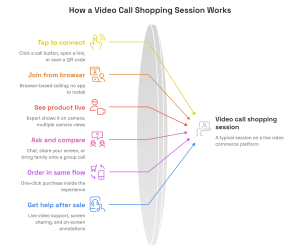
Here is what a typical session looks like on a live video commerce platform such as PhygitalMax, which brands use to bring store-style help to their websites and apps.
- Tap to connect. You click a call button on the product page, open a link, or scan a QR code.
- Join from your browser. PhygitalMax lists browser-based calling, so there is no app to install.
- See the product live. The expert shows it on camera. Agents can use multiple camera views, so you see the details that matter.
- Ask and compare. Chat during the call, share your screen, or bring family onto a group call. Scheduled calls and demo reminders are supported too.
- Order in the same flow. Brands can enable one-click purchase inside the experience.
- Get help after the sale. The same kind of link works for live video support, with screen sharing and on-screen annotations to guide you through setup.
This is what “phygital” means: the human help of a store, delivered online. Read more about phygital commerce. You can see all the key features, explore the live video shopping solution, or try the live demo.
Which Categories Are Moving to Video Call Shopping?
Electronics and Home Appliances
Appliances are an easy fit. You want to see the size, hear the noise and check the controls before you pay. Gizmo Smart lists products with a QR code for each one, so you can scan and join a live video demo.
Before the call, its guides help you decide what to ask: the air fryer size guide, how much suction a kitchen chimney needs, inverter vs non-inverter AC, TV viewing distance and smart lock buying tips.
Good questions for the call: size and capacity, noise, installation, warranty and service.
Two-Wheelers
Honda 2Wheelers India has launched a VR-based virtual showroom for its BigWing premium motorcycles (Turn of Speed). A video call is a lighter option. A dealer can walk around the bike, show colors and accessories, and explain features while you watch. Gizmo Smart’s live demo page also lists two-wheelers, including the Hero Glamour X and Hero Xpulse.
Good questions for the call: on-road price, variants, accessories, test ride booking and finance options.
Cars and the Auto Industry
Car buyers already lean on online research and video (see the 2017 study above). A video call with a dealer can cover a walkaround, differences between variants and a test drive booking, so you visit the showroom only when you are close to deciding.
Mattresses and Furniture
Furniture is a large market that is slowly moving online. RedSeer estimated online furniture at $700 million in calendar year 2020, about 3.5% of a $20 billion market (Inc42, October 2021). Invest India expects D2C furniture and home decor sales to grow at a 36% CAGR to $17 billion by 2030 (Indian Retailer, March 2025). That is a forecast, not a result.
Video helps because buyers have questions photos cannot answer. In 2020, one furniture retailer told Business Today that customers could get expert advice on a video call. In 2021, Godrej Interio’s SVP told Inc42 he expected virtual product tours and online consultations to become basic expectations.
Good questions for the call: for mattresses, ask about layers, firmness, the trial period and the return policy. For sofas and beds, ask about dimensions, fabric options, delivery and assembly.
Jewelry, Fashion and Beauty
These categories depend on look, fit and trust. A stylist on a video call can show pieces in good light, suggest options and answer questions about size, finish and care.
What Do Buyers Get From Video Call Shopping?
- See it working. Not just photographed.
- Get straight answers. Warranty, returns, installation and pricing, the same topics buyers told LocalCircles they care about.
- Compare with help. Someone who knows the range can narrow your choices.
- Shop from home. Or with family on the same call.
What Are D2C Brands Doing Differently?
D2C brands do not have stores, so the website has to do the shop’s job. Here is what works for brands starting with video call shopping:
- Put a “talk to an expert” button next to the buy button on high-ticket product pages.
- Staff calls with trained product experts, not general support.
- Use one setup for sales and support. See how support conversations turn into revenue and how video brings the in-store experience online.
- Record and review sessions for quality, and track CSAT after each call.
- Start where buyers ask the most questions, such as appliances, two-wheelers or mattresses.
If you run a brand and want to go live, see PhygitalMax live video shopping or book a live demo. For the full case, read why video commerce is a game-changer for D2C brands.
How to Get the Most From Your First Video Shopping Call
- Write your questions first. Budget, size, use and must-have features.
- Measure the space. Know where the product will go.
- Ask to see it in use. Not just on a shelf.
- Ask about warranty, returns and installation.
- Note the price and order terms before the call ends.
Where Is Video Call Shopping in India Heading?
Stores are not going away. Indian Retailer notes that physical stores stay crucial for furniture even as online grows. Our view: the likely mix is phygital, where video calls sit between browsing and buying, especially for products people want to see, hear or ask about first.
For a wider look at why video works at every step of the customer journey, read the future of CX and video.
FAQs
Q: What is video call shopping?
Video call shopping is buying a product after a live video call with a store or brand expert who shows the product, answers questions and helps you order.
Q: Is video call shopping available in India?
Yes. Large marketplaces such as Flipkart run video and live shopping, and brands use video platforms for live demos and sales calls.
Q: How does video call shopping work?
You tap a call button, link or QR code, join a live video call, see the product on camera, ask questions and place the order.
Q: Do I need to download an app?
It depends on the platform. On PhygitalMax, calls run in the browser, so no app is needed.
Q: Can I buy a two-wheeler or furniture on a video call?
You can see the product, ask questions and shortlist options on a call. Steps like test rides, delivery and assembly depend on the brand.
Q: How is video call shopping different from live stream shopping?
A live stream is one host talking to many viewers. A video call is a live conversation about your needs.
Try It
Want to see a product live before you buy? Start with Gizmo Smart’s live video demo page. Running a brand? See how PhygitalMax can take your products live.
Share: