+91 - 9877098771
 ‣Blogs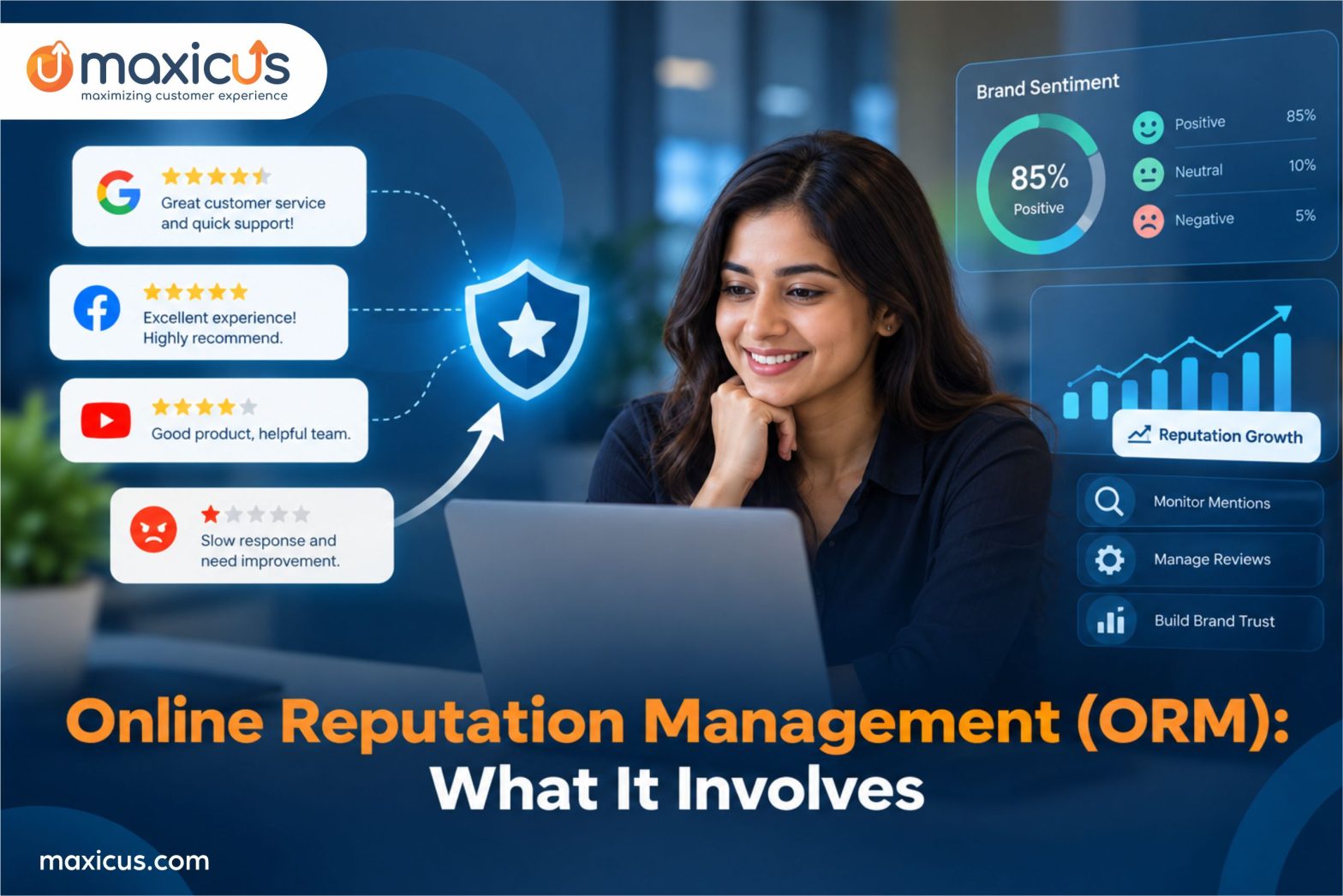
Online Reputation Management: What It Actually Involves
Most people hear “online reputation management” and picture damage control: something you call in after a bad review goes viral. That’s a small part of it. The bigger, less exciting part is what happens every single day, long before anything goes wrong.
Online reputation management (ORM) is the ongoing work of tracking what’s being said about a brand across the internet, responding to it in a way that actually helps, and catching small problems while they’re still small. Done properly, it’s not a fire extinguisher. It’s the fire alarm, the sprinkler system, and the maintenance crew, all at once.
Here’s what that actually looks like in practice.
What Online Reputation Management Actually Involves
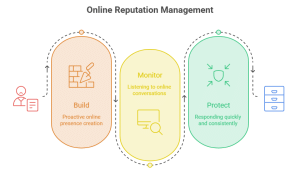
Strip away the jargon and ORM comes down to three ongoing jobs:
- Build: The proactive side. Shaping how a brand shows up online before anyone goes looking for trouble, with a consistent presence across the platforms that actually influence buying decisions, not just a social page updated twice a year.
- Monitor: The listening side. A brand’s reputation is built out of Google reviews, Trustpilot scores, Reddit threads, app store ratings, LinkedIn comments, news mentions, and a dozen other corners of the internet, often at the same time.
- Protect: What happens when monitoring catches something. A single unanswered complaint can turn into a pattern that shows up in search results. Protecting a reputation is mostly about speed and consistency, not clever crisis messaging.
Monitoring Every Channel That Actually Talks About You
The mistake most brands make with ORM is treating it as a Google reviews problem. It isn’t. Real monitoring covers:
- Review platforms: Google Business, Trustpilot, app stores
- Social channels: Instagram, Facebook, LinkedIn, Twitter/X, TikTok
- Discussion forums: Reddit, Quora
- Video and messaging: YouTube, WhatsApp, Telegram
- News and blog mentions across the open web
A brand that only checks its Google Business listing is monitoring maybe a third of what actually matters. This is also why ORM overlaps so heavily with online review management: reviews are the most visible, most searched, and most decision-influencing piece of the puzzle, but they’re one piece, not the whole picture.
Responding at the Speed Reputation Actually Moves At
Response time is the part of ORM that’s hardest to fake and easiest to underinvest in. What actually makes a difference:
- A ticketing system that routes reputation-related mentions to the right team
- Automated alerts for anything urgent
- Clear approval workflows for public responses
- Mobile access, so a response doesn’t wait for someone to be back at a desk
Protecting the Brand Before a Small Problem Becomes a Big One
This is where ORM stops being reactive. Spotting a pattern across five negative mentions before it becomes fifty, catching a product complaint before it turns into a viral thread, and having a documented process for handling a genuine crisis are what separate reputation management from reputation cleanup.
Why Online Reputation Management Isn’t Optional Anymore
The numbers on this are well established:
- 97% of consumers read reviews for local businesses, and 31% will only use a business rated 4.5 stars or higher, up sharply from 17% the year before (BrightLocal, Local Consumer Review Survey).
- A single additional star on Yelp correlated with a 5 to 9% increase in annual revenue (Harvard Business School / Michael Luca).
- Products with five or more reviews were up to 270% more likely to sell than products with none (Spiegel Research Center).
Put simply: reputation isn’t a soft metric anymore. It shows up directly in conversion and revenue.
What to Look for in Online Reputation Management Services
Not all online reputation management services are built the same way. The difference usually comes down to:
- Coverage: Does the service actually monitor the platforms your customers use, or just the two or three easiest to report on? At Maxicus, our ORM approach tracks conversations across more than 20 channels, including Google Business, Trustpilot, Instagram, Facebook, LinkedIn, Reddit, Quora, YouTube, app stores, and news sources, so nothing gets missed because it happened somewhere unexpected.
- Speed: A monitoring dashboard is only useful if it turns into a fast, appropriate response, through real workflows: ticket management, role-based access, approval chains, and mobile compatibility.
- Follow-through on leads, not just complaints: A lot of high-intent interest shows up in social comments and DMs first. Services that only watch for complaints miss the leads sitting in the same inbox.
Building an Online Reputation Management Strategy That Actually Holds Up
A workable online reputation management strategy usually has four parts:
- A single view across every channel, so nothing gets monitored in isolation.
- Defined response windows, so “we’ll get to it” isn’t the default answer to a public complaint.
- Clear escalation rules, so a frontline response and a full brand crisis don’t get handled the same way.
- Regular reporting on sentiment trends, not just individual incidents, so patterns get caught before they become headlines.
The strategy matters more than any single tool. A brand with a strong process and a basic dashboard will consistently outperform a brand with an expensive platform and no process.
How This Connects to the Rest of Customer Experience
ORM doesn’t sit in its own silo. It’s one piece of a much bigger customer experience picture:
- The sentiment data that comes out of ORM is the same data that powers AI-driven sentiment analysis and quality monitoring, just applied earlier, at the public-facing stage instead of after a support call ends.
- High-intent leads that surface through social monitoring feed directly into customer lifecycle management, turning a reputation touchpoint into an actual pipeline.
- When reputation issues turn into a support volume spike, back office support and tech support capacity absorb the load without customers noticing the strain.
Brands that treat reputation, support, and customer lifecycle as one connected system tend to see the return on customer experience investment show up faster, because a good reputation and a good support experience reinforce each other instead of working separately.
FAQs
Q: What is online reputation management?
Online reputation management is the ongoing process of monitoring what’s said about a brand across the internet (reviews, social media, forums, app stores, and news), responding to it appropriately, and addressing issues before they escalate. It covers three functions: building a strong online presence, monitoring conversations across channels, and protecting the brand when something goes wrong.
Q: Why is online reputation management important?
Reputation now directly affects revenue. Research from BrightLocal shows 97% of consumers read reviews before choosing a local business, and Harvard Business School research found that a single additional star rating on Yelp correlated with a 5 to 9% increase in annual revenue. A reputation problem left unmonitored doesn’t stay contained. It shows up in lost conversions.
Q: How much does online reputation management cost?
Cost depends heavily on scope: how many channels are monitored, how fast responses need to be, and whether it includes proactive strategy work or just monitoring. Rather than pricing by a flat monthly fee, it’s worth asking any provider exactly which channels, response times, and reporting are included before comparing costs.
Q: How do I choose an online reputation management company?
Look at channel coverage first (does it go beyond Google reviews and one or two social platforms), then response infrastructure (ticketing, approvals, mobile access), and finally whether the service surfaces high-intent leads, not just complaints. A provider that only reports on star ratings is doing a fraction of the job.
Q: Is online reputation management the same as online review management?
No, though they overlap heavily. Online review management focuses specifically on reviews across platforms like Google, Trustpilot, and app stores. Online reputation management is broader: it includes reviews, but also social media, forums, news coverage, and proactive brand-building work across all of it.
Ready to See What This Looks Like in Practice?
If your brand’s reputation is currently being managed across three tabs and a spreadsheet, there’s a better way. Connect with us now and see the monitoring, response, and protection framework in action.
Share: