+91 - 9877098771
 ‣Blogs
A Day in the Life of a Customer Experience Executive at Maxicus
Ever wondered what actually happens behind the headset during a shift at a CX company? It is not just answering calls on repeat. It is a mix of live problem-solving, quick learning, small wins, and a surprising amount of teamwork. Here is what a real day looks like for a customer support executive at Maxicus, from the first login of the morning to the final ticket closed at night.
What Does a Customer Support Executive Actually Do?
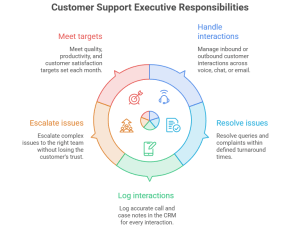
The role goes beyond taking calls. On any given day, a customer support executive at Maxicus handles customer queries across voice, chat, or email, resolves complaints, logs interactions accurately, and works within set turnaround times, all while keeping the customer’s experience at the center of every conversation. It is part communication, part problem-solving, and part patience. Core responsibilities usually include:
- Handling inbound or outbound customer interactions across voice, chat, or email.
- Resolving queries and complaints within defined turnaround times.
- Logging accurate call and case notes in the CRM for every interaction.
- Escalating complex issues to the right team without losing the customer’s trust.
- Meeting quality, productivity, and customer satisfaction targets set each month.
9:00 AM: Login and Morning Briefing
The day starts with a quick team huddle. Team leads share yesterday’s numbers, any process updates, and the focus areas for the day. It takes ten minutes but sets the tone for the shift ahead. Then it is login time on the CRM and dialer systems, headset on, status set to available, ready for the first interaction of the day.
10:00 AM: Handling Live Customer Interactions
This is the core of the job. Calls, chats, or emails start coming in, and every interaction is different. One customer wants a refund status, the next needs help navigating an app, and another is simply frustrated and needs to be heard first. Executives lean on Maxicus’s AI-backed knowledge platform for instant answers, so they are not stuck searching manually while a customer waits. It keeps average handling time down without making the conversation feel rushed, and it means less time hunting for information and more time actually helping the person on the other end.
1:00 PM: Lunch, Learning, and a Little Gamified Training
Post-lunch is usually a training slot, and at Maxicus, training does not mean sitting through slides. It often means short, game-like modules with points, badges, and leaderboards built in, turning process updates and skill refreshers into something the team actually looks forward to. Learn more about how gamification makes training fun and effective at Maxicus. It is a nice reset before the afternoon shift picks back up.
3:00 PM: Quality Checks and Real-Time Feedback
Every few days, a quality analyst reviews a sample of calls or chats and shares feedback directly, what went well, what could be sharper, and where a small tweak in tone or process could make a big difference. Increasingly, this process is backed by sentiment analysis and data dashboards rather than gut feel alone. Curious how that works? See the role of data literacy for CX agents. This is also when executives get a real sense of their performance trends, not just at month-end, so improvements happen continuously rather than in one big review.
5:00 PM: Team Huddles and Small Wins
Late afternoon usually brings a quick team check-in, sometimes to flag a tricky customer issue that needs escalation, sometimes just to celebrate someone hitting a resolution milestone or a birthday shoutout. Recognition is a big part of the culture here, and it shows up in small, consistent ways rather than only at annual events. See how Maxicus celebrates success with awards and team events.
6:30 PM: Wrapping Up and Planning Ahead
Before logging off, executives close out pending tickets, update the CRM, and hand off anything unresolved to the next shift so nothing falls through the cracks. Many also use this time to check in with their team lead about growth conversations, since the path from executive to team lead or quality analyst is a real and common one at Maxicus, not just something mentioned in onboarding. Read more about career growth opportunities and how to turn your job into a thriving career.
Frequently Asked Questions
Is a customer support executive job stressful?
It can be fast-paced, especially during high call volumes, but structured processes, training, and team support make it manageable rather than overwhelming for most executives.
Do you need experience to become a customer support executive at Maxicus?
No. Freshers are hired regularly and trained on communication, tools, and process knowledge from day one, so prior BPO experience is helpful but not required.
What skills matter most in this role?
Clear communication, active listening, patience, and comfort with basic digital tools like CRMs and chat platforms matter more than formal qualifications.
What does career growth look like after this role?
Executives commonly move into Team Lead, Quality Analyst, Trainer, or Operations roles within a few years of consistent performance.
What tools does a customer support executive use daily?
Typically a CRM system, a dialer or chat platform, an internal knowledge base for quick answers, and quality or performance dashboards to track progress.
Thinking About a Day Like This for Yourself?
If this sounds like a role you would enjoy, preparation is half the battle. Check out our 25 BPO interview questions and answers before you apply, then explore open customer support roles at Maxicus.
Share: