+91 - 9877098771
 ‣Blogs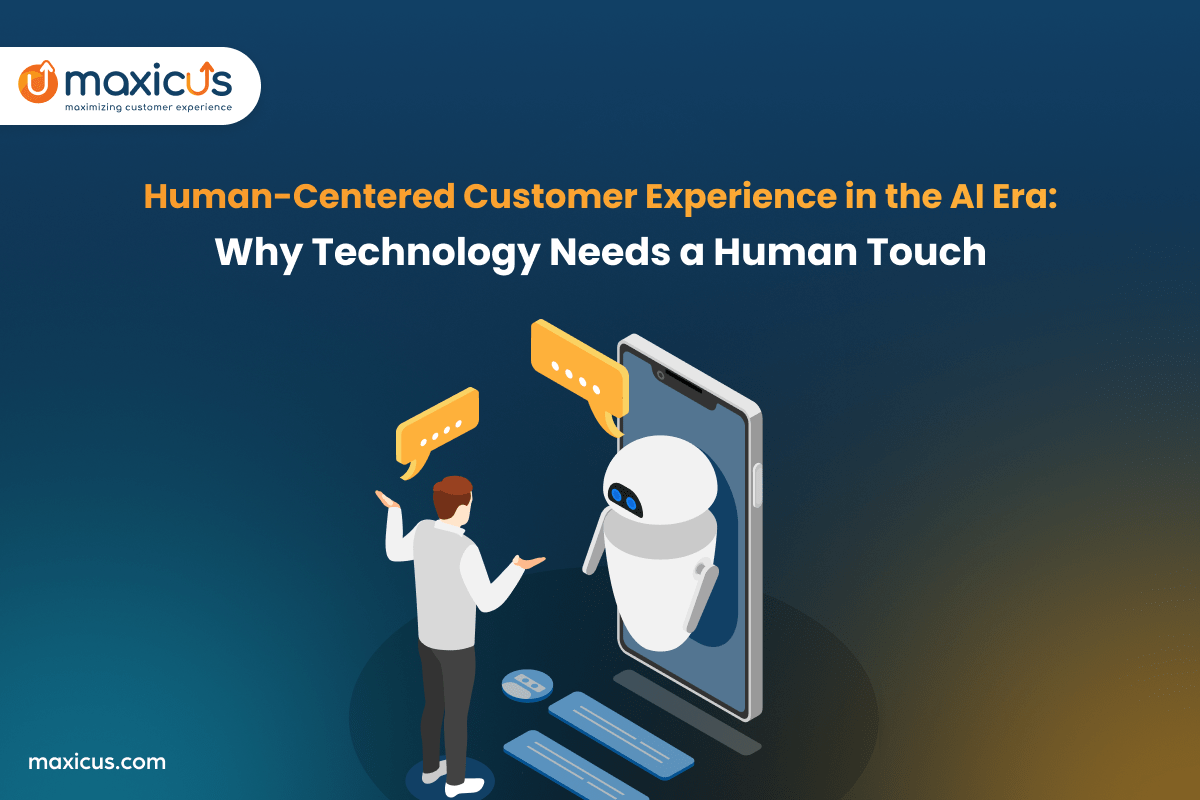
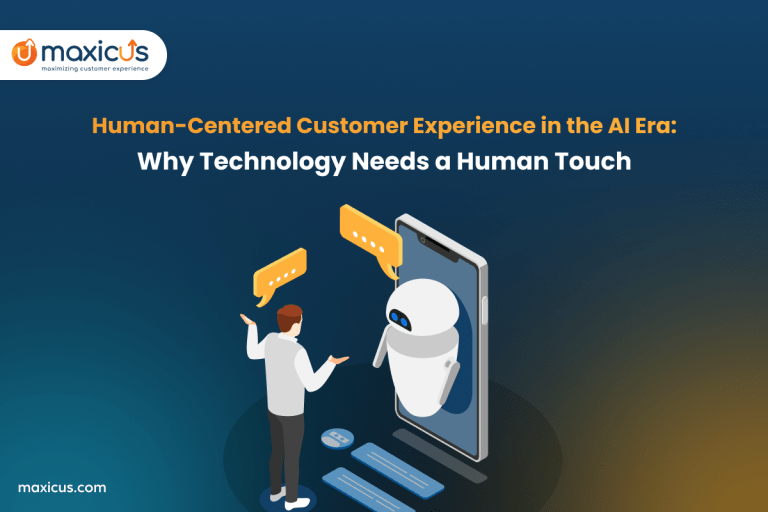
Human-Centered Customer Experience in the AI Era: Why Technology Needs a Human Touch
During the global lockdowns, people didn’t just miss workplaces, travel, or social gatherings — they missed connection. They missed conversations that felt real, empathy that felt sincere, and interactions that felt personal. Human beings are wired for connection. It is not a luxury; it is a fundamental need.
Today, as businesses move deeper into digital transformation powered by artificial intelligence, automation, and machine learning, the challenge is no longer whether to adopt technology — it is how to adopt it without losing humanity. This balance is especially critical in customer experience.
Technology can optimize speed, automate repetitive tasks, and analyze massive volumes of data in seconds. However, long-term brand loyalty is not built on efficiency alone. It is built on trust, empathy, and emotional connection. In 2026, the most successful brands are not the most automated — they are the most human, powered by intelligent systems.
Understanding Digital Customer Experience
Digital Customer Experience (DCX) refers to every interaction a customer has with a brand across digital platforms. This includes websites, mobile apps, chatbots, social media channels, email communication, and online support portals. From the moment a customer discovers a product to post-purchase service and feedback, each digital touchpoint shapes perception.
Businesses often measure digital experience using metrics such as Net Promoter Score (NPS), Customer Satisfaction Score (CSAT), Customer Effort Score (CES), retention rates, and lifetime value. These metrics are essential because they provide measurable insights into performance.
However, numbers alone cannot capture emotion. A customer may complete a transaction quickly, but if the experience feels robotic or indifferent, long-term loyalty may suffer. A truly successful digital experience blends operational excellence with genuine human understanding.
Why the Human Touch Still Matters
As AI systems become more advanced, customers have also become more sensitive to artificial interactions. We have all encountered automated chat responses that fail to grasp context or scripted service calls that ignore the actual problem. These moments create frustration, not loyalty.
Customers do not reject automation. In fact, they appreciate speed and convenience. What they reject is feeling unheard or unimportant. They expect technology to enhance their journey — not replace meaningful interaction.
Human agents bring emotional intelligence into conversations. They can detect tone shifts, understand frustration, and adapt their responses accordingly. This flexibility is something automation still struggles to replicate fully. When organizations combine AI efficiency with human empathy, they create experiences that are both seamless and sincere.
Using AI to Enhance — Not Replace — Human Interaction
Artificial intelligence, when implemented strategically, can significantly improve customer experience without removing the human element. It can analyze customer data such as purchase history, browsing behavior, and past interactions to provide valuable context. This allows service representatives to approach conversations informed and prepared, eliminating the need for customers to repeat themselves.
AI can also generate predictive insights. For example, it can identify customers at risk of churn, suggest relevant product recommendations, or detect dissatisfaction through sentiment analysis. These insights enable businesses to respond proactively rather than reactively.
At the same time, organizations must ensure customers can easily transition from automated systems to human representatives when needed. Automation should handle routine queries like password resets, order tracking, and FAQs. Complex, emotional, or high-value interactions should always have a clear path to a human agent.
This balanced approach ensures efficiency without sacrificing connection.
The Business Impact of Human-Centered CX
Customer experience directly influences business outcomes. When customers feel valued and understood, they are more likely to remain loyal. Retention improves, and the cost of acquiring new customers decreases significantly.
Positive experiences also drive referrals. Satisfied customers naturally share their experiences, recommend brands to friends and colleagues, and leave favorable reviews. Word-of-mouth marketing remains one of the most powerful and cost-effective growth strategies.
Additionally, strong customer experience strengthens brand loyalty. In competitive markets where product features are increasingly similar, experience becomes the primary differentiator. A brand that listens, responds thoughtfully, and demonstrates care stands out.
By aligning digital systems with human empathy, organizations can better understand customer needs, resolve issues effectively, and foster long-term relationships.
Avoiding the Pitfall of Over-Automation
One of the most common mistakes organizations make is over-automating in pursuit of cost reduction. While automation can improve operational efficiency, excessive reliance on it can create emotional distance between the brand and the customer.
Customers do not want to feel like case numbers processed through a system. They want acknowledgment and reassurance. Removing friction from processes is beneficial; removing humanity is not.
The goal should never be to eliminate human involvement but to empower it with better tools and insights.
Striking the Right Balance
An effective strategy in 2026 involves three key principles:
- Automate repetitive and low-complexity tasks.
- Equip human agents with AI-driven insights to enhance decision-making.
- Ensure clear and seamless escalation paths for complex or emotional interactions.
By following this framework, organizations can deliver speed without losing empathy and scale without losing authenticity.
Conclusion: Technology Should Amplify Humanity
Digital transformation is essential in today’s business environment. Customers expect convenience, personalization, and rapid response times. However, they also expect respect, understanding, and emotional intelligence.
Technology can execute tasks at scale. It can process data faster than any human team. But it cannot fully replace the value of empathy and human judgment.
In this digital age, innovation must be intentional. The brands that will thrive are those that use AI to support their people — not replace them. When technology amplifies humanity instead of overshadowing it, customer satisfaction rises, loyalty strengthens, and businesses grow sustainably.
The future of customer experience is not automated.
It is human-centered — and technology-enabled.
Share: