+91 - 9877098771
 ‣Blogs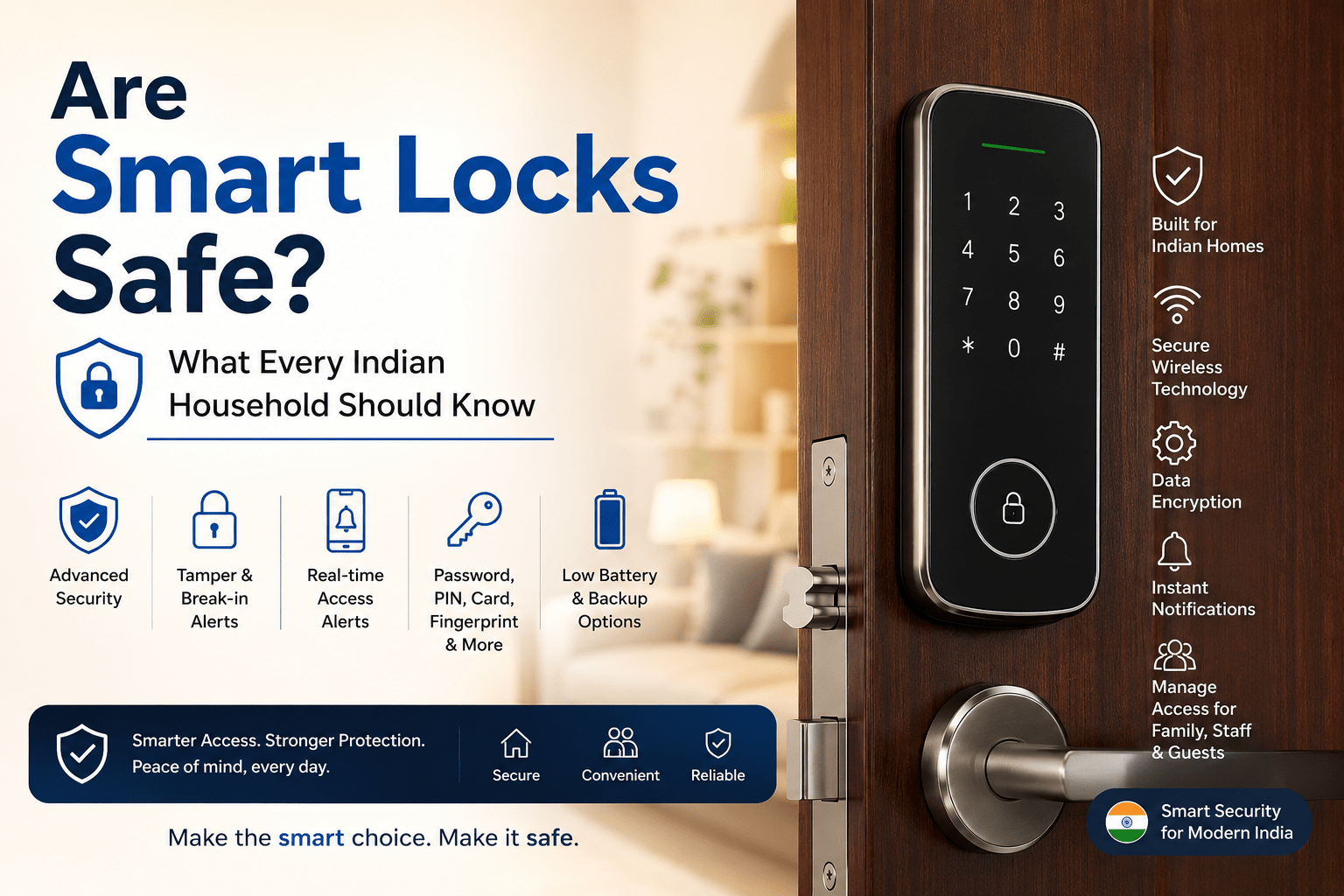
Are Smart Locks Safe? What Every Indian Household Should Know
The short answer is yes. Smart locks are generally safe when you choose a reliable product and follow basic security practices. That said, it is fair to ask how they compare to traditional locks, what risks exist, and what to look for when buying one for your home in India.
This article walks you through everything you need to know, including how smart locks handle power cuts, what to expect in Indian homes, and which features genuinely matter.
Table of Contents
- Understanding Smart Locks
- Safety Features to Look For
- Pros and Cons of Smart Locks
- Smart Locks in the Indian Context
- Tips for Maximising Safety
- Frequently Asked Questions
- Conclusion
1. Understanding Smart Locks
Smart locks replace the traditional key-and-cylinder mechanism with electronic access control. They allow you to lock and unlock your door remotely using a smartphone app, or directly through a fingerprint reader, PIN code, or Bluetooth connection.
Types of Smart Locks
Smart locks are available in several formats suited to different needs and door types:
- Keypad locks: You enter a PIN code to unlock the door. Simple, reliable, and popular for Indian homes.
- Biometric locks: Fingerprint recognition offers fast, keyless access and is difficult to replicate.
- Wi-Fi and Bluetooth locks: Controlled through a smartphone app. Bluetooth models work offline; Wi-Fi models allow remote access from anywhere.
- Electronic deadbolts: These replace traditional deadbolts and can be retrofitted onto most existing doors.
How Smart Locks Work
Most smart locks connect to your home’s Wi-Fi network or use Bluetooth to communicate with your phone. The lock receives an encrypted signal to authorise or deny access. You can manage access permissions, view entry logs, and receive real-time notifications through the companion app.
2. Safety Features to Look For
When evaluating smart lock safety, focus on the following:
- AES Encryption: Military-grade encryption ensures that access codes and communication between your phone and the lock cannot be intercepted.
- Tamper Alerts: The lock sends an immediate notification if someone attempts forced entry.
- Auto-Lock Function: The door locks automatically after a set period, removing the risk of accidentally leaving it unlocked.
- Anti-Peep PIN: Allows you to enter extra digits before or after your real PIN so that anyone watching cannot guess your code from your finger movements.
- Backup Power Options: Quality smart locks include battery backup and a physical key override so you are never locked out during a power failure.
3. Pros and Cons of Smart Locks
Advantages
- No more fumbling with keys: Unlock with a tap, fingerprint, or voice command.
- Real-time alerts: Know exactly who enters and exits your home, and when.
- Remote access: Let in a guest, delivery person, or family member from anywhere.
- Guest access management: Create temporary PIN codes that expire automatically.
- Works with smart home devices: Compatible with Amazon Alexa, Google Home, and similar platforms.
Considerations
- Initial cost: Smart locks cost more upfront than traditional locks, though prices in India start from around Rs 5,000.
- Technology dependence: A software bug or connectivity issue can occasionally affect function — which is why physical key backups matter.
- Data privacy: Choose brands with clear privacy policies and no history of data breaches.
4. Smart Locks in the Indian Context
One of the most common concerns among Indian buyers is whether smart locks hold up under Indian conditions. Here is what to expect:
Power Cuts
Smart locks run on internal batteries and are not dependent on your home’s electricity supply. Most models last 6 to 12 months on a set of batteries and alert you when charge runs low. A backup physical key ensures you are never stranded.
Indian Door Compatibility
Indian homes commonly use single-cylinder, double-cylinder, or mortise lock setups. Many smart lock brands now offer retrofit options that install over your existing lock mechanism without requiring door modifications.
Apartment Buildings
Many Indian apartment societies have security desks or intercoms at the main gate. A smart lock on your individual flat door works independently of this system and adds a layer of personal security without interfering with building-level access control.
Pricing in India
Entry-level smart locks are available from Rs 5,000. Mid-range models with biometric features and Wi-Fi connectivity typically cost between Rs 8,000 and Rs 18,000. Premium options can go higher.
5. Tips for Maximising Safety
- Keep the firmware updated: Manufacturers release regular updates that patch security vulnerabilities.
- Use a strong, unique PIN: Avoid obvious codes like 1234 or your birth year.
- Enable two-factor authentication on your app account wherever available.
- Keep a backup physical key: Store it securely with a trusted person rather than under a doormat.
- Buy from reputable brands: Look for established companies with accessible customer support and a warranty of at least one year.
Frequently Asked Questions
Q: What happens if the Wi-Fi goes down?
Most smart locks operate independently of your Wi-Fi. You can still use your fingerprint, PIN, or physical key. Remote app access requires connectivity, but local access always works.
Q: Can smart locks be hacked easily?
Well-designed smart locks using AES encryption are considerably harder to compromise than a traditional lock that can be picked. Keep your app and firmware updated to minimise risk.
Q: Are smart locks suitable for Indian apartment doors?
Yes. Many brands offer models specifically designed for Indian door types, including mortise and deadbolt configurations common in Indian apartments.
Q: What happens during a power cut?
Smart locks are battery-powered, so a power outage at your building has no effect on them. If the batteries run low, most models send alerts in advance and include a physical key backup.
Q: How long do smart lock batteries last?
Battery life varies by model and usage, but most smart locks last 6 to 12 months on a standard set of AA batteries. High-frequency use may reduce this somewhat.
Conclusion
Smart locks are a smart upgrade for any Indian home. They are secure, convenient, and designed to handle the realities of modern living — including power fluctuations and the occasional forgotten key.
Home security evolves quickly. Upgrading before you face a problem is always the smarter move than waiting until one occurs.
Ready to find the right smart lock for your home? Book a free live demo with our experts and see exactly how it works before you decide.
Share: