+91 - 9877098771
 ‣Blogs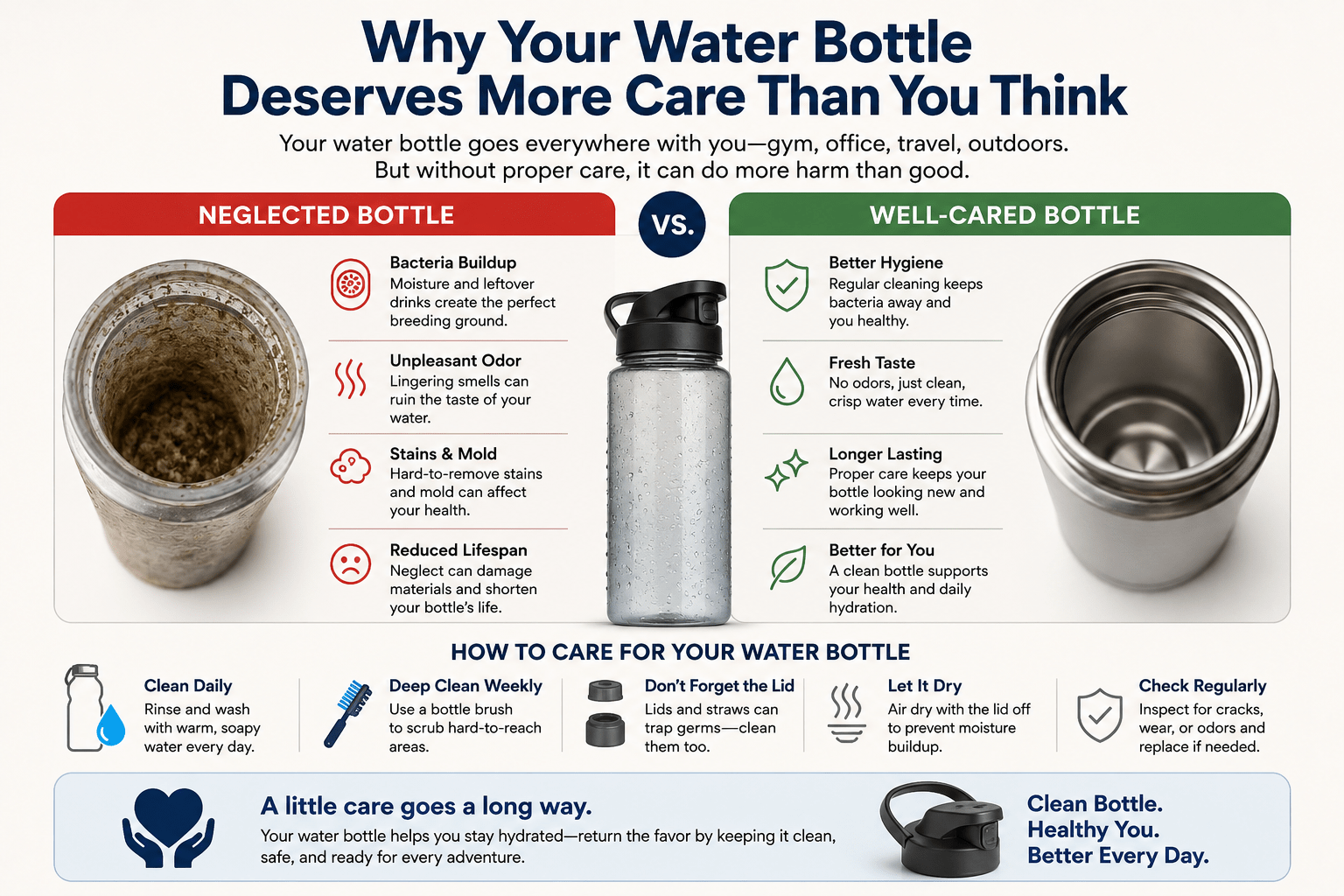
Why Your Water Bottle Deserves More Care Than You Think
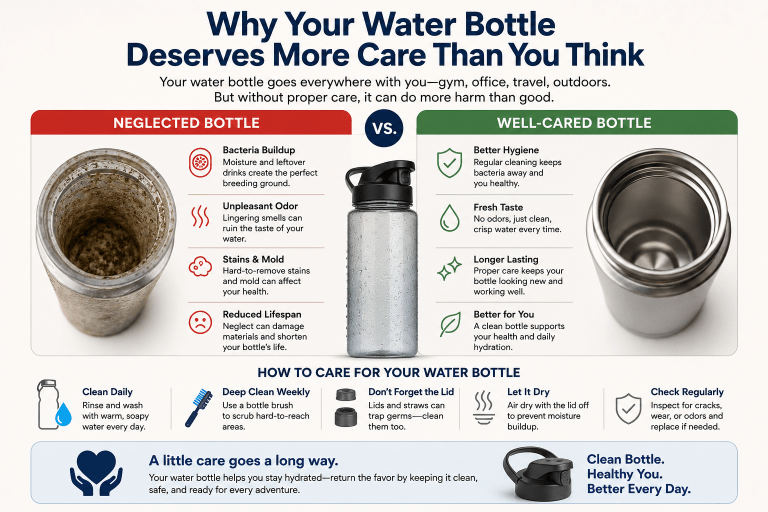
Staying hydrated is essential for physical and mental health. Most people know this, and many carry a reusable water bottle to make it easier. But here is something far fewer people realise: a reusable water bottle that is not cleaned properly can carry more bacteria than many household surfaces we think of as dirty. Moisture trapped inside a bottle, particularly in the lid and cap area, creates an ideal environment for bacteria and mould to multiply.
The good news is that a simple cleaning routine keeps this completely under control. This blog explains how to care for your water bottle properly, why it matters, and what to watch out for.
Table of Contents
- The Importance of Water Bottle Hygiene
- What Is Inside Your Water Bottle?
- A Quick Comparison of Common Bottle Types
- How to Keep Your Water Bottle Clean and Safe
- Common Mistakes to Avoid
- Frequently Asked Questions
- Conclusion
1. The Importance of Water Bottle Hygiene
Drinking water is only as clean as the container it sits in. A bottle that is rinsed occasionally but never deep-cleaned can harbour bacteria that accumulate gradually over days of repeated use. This is especially true for:
- Bottles with narrow necks that prevent a cleaning brush from reaching all internal surfaces.
- Lids with silicone seals and grooves that trap moisture even after the bottle appears dry.
- Bottles left partially filled for several hours, which creates conditions for bacterial growth.
- Bottles used for beverages other than plain water, such as juice or sports drinks, which leave sugar residue that accelerates bacterial growth.
2. What Is Inside Your Water Bottle?
Many water bottles include features like built-in filters, infusers, or silicone seals that enhance their function. These same features can trap moisture and bacteria if they are not cleaned separately and regularly.
Understanding the components of your bottle guides you in cleaning it effectively:
- Main body: Needs daily rinsing and regular scrubbing with a bottle brush.
- Lid and cap: Often the dirtiest part. Separate the lid and clean all components individually.
- Silicone seals and gaskets: Remove these where possible and clean or replace them regularly.
- Filters and infusers: Follow the manufacturer’s cleaning schedule for these components.
The reassuring reality is that a simple weekly deep clean combined with daily rinsing is all it takes to keep your bottle completely hygienic and safe to use.
3. A Quick Comparison of Common Bottle Types
Not all water bottles are the same, and the type you use affects both how you care for it and what it is best suited for:
- Standard plastic bottle: Lightweight and inexpensive. Can develop odours if not cleaned regularly. Check that it is BPA-free for repeated daily use.
- Stainless steel bottle: Durable and excellent at maintaining temperature. Resistant to odour and bacteria when cleaned properly. Heavier than plastic.
- Filtered bottle: Provides clean drinking water from a variety of sources. The built-in filter requires regular replacement and separate cleaning attention.
4. How to Keep Your Water Bottle Clean and Safe
A consistent routine is the most effective approach:
- Rinse after every use: As soon as you finish using the bottle, give it a quick rinse with warm water to prevent any residue from drying and sticking.
- Use mild soap and a bottle brush daily: A soft bottle brush allows you to scrub all internal surfaces, including the base and shoulder of the bottle that a cloth cannot reach.
- Disassemble the lid completely: Remove all seals, gaskets, and straws and clean each separately.
- Check and replace the filter: Follow the manufacturer’s replacement schedule for any built-in filters. An overdue filter does not protect your water effectively.
- Air dry thoroughly upside down: Moisture trapped inside an upright bottle is the most common cause of mould growth. Always dry with the opening facing down on a clean rack.
- Deep clean weekly: Fill the bottle with warm water and a tablespoon of baking soda. Leave it for 30 minutes, scrub, and rinse thoroughly. This removes any accumulated odours and residue.
“Now that you know which bottle type suits you best, let’s look at how to keep it clean and safe for daily use.”
5. Common Mistakes to Avoid
Not cleaning regularly
Even a bottle that looks clean may be carrying bacteria from the previous day. Daily rinsing takes 30 seconds and prevents significant accumulation over time.
Using harsh cleaners
Bleach and strong chemical cleaners can damage the bottle’s inner coating, degrade silicone seals, and leave residues that affect taste. Stick to mild dish soap or a baking soda solution for regular cleaning.
Ignoring the filter
A filter that is past its replacement date is not just ineffective. It can actually become a source of contamination if bacteria accumulate on the filter material. Replace on schedule.
Frequently Asked Questions
Q: Are all water bottles the same?
No. Bottles vary in material, insulation quality, and included features. Stainless steel is generally the most durable and hygienic option for daily use, while plastic bottles are lighter and more affordable but require more frequent replacement.
Q: How often should I clean my water bottle?
Rinse daily after every use and deep clean with soap and a brush at least three to four times a week. A full deep clean with baking soda or white vinegar once a week helps remove odours and any accumulated residue.
Q: Can I put my water bottle in the freezer?
Some insulated stainless steel bottles are freezer-safe, but check the manufacturer’s guidelines first. Freezing can sometimes affect the vacuum seal in double-wall bottles. Avoid freezing plastic bottles, as this can accelerate chemical degradation over time.
Q: What should I do if my water bottle leaks?
Inspect the lid, cap, and all seals for visible damage or wear. Replace any damaged components. If the leak persists after replacing seals, contact the manufacturer. Most reputable brands offer replacement parts.
Q: How long does a water bottle typically last?
A well-maintained stainless steel bottle can last many years with proper care. Plastic bottles generally need replacing after 12 to 18 months of heavy daily use, or sooner if you notice discolouration, odour that does not wash out, or visible damage.
Conclusion
Your water bottle works hard for you every single day. Taking a few minutes to clean it properly is a small habit with a meaningful payoff for your hygiene and your health.
A clean bottle means clean water. And that is entirely in your hands.
Share: