+91 - 9877098771
 ‣Blogs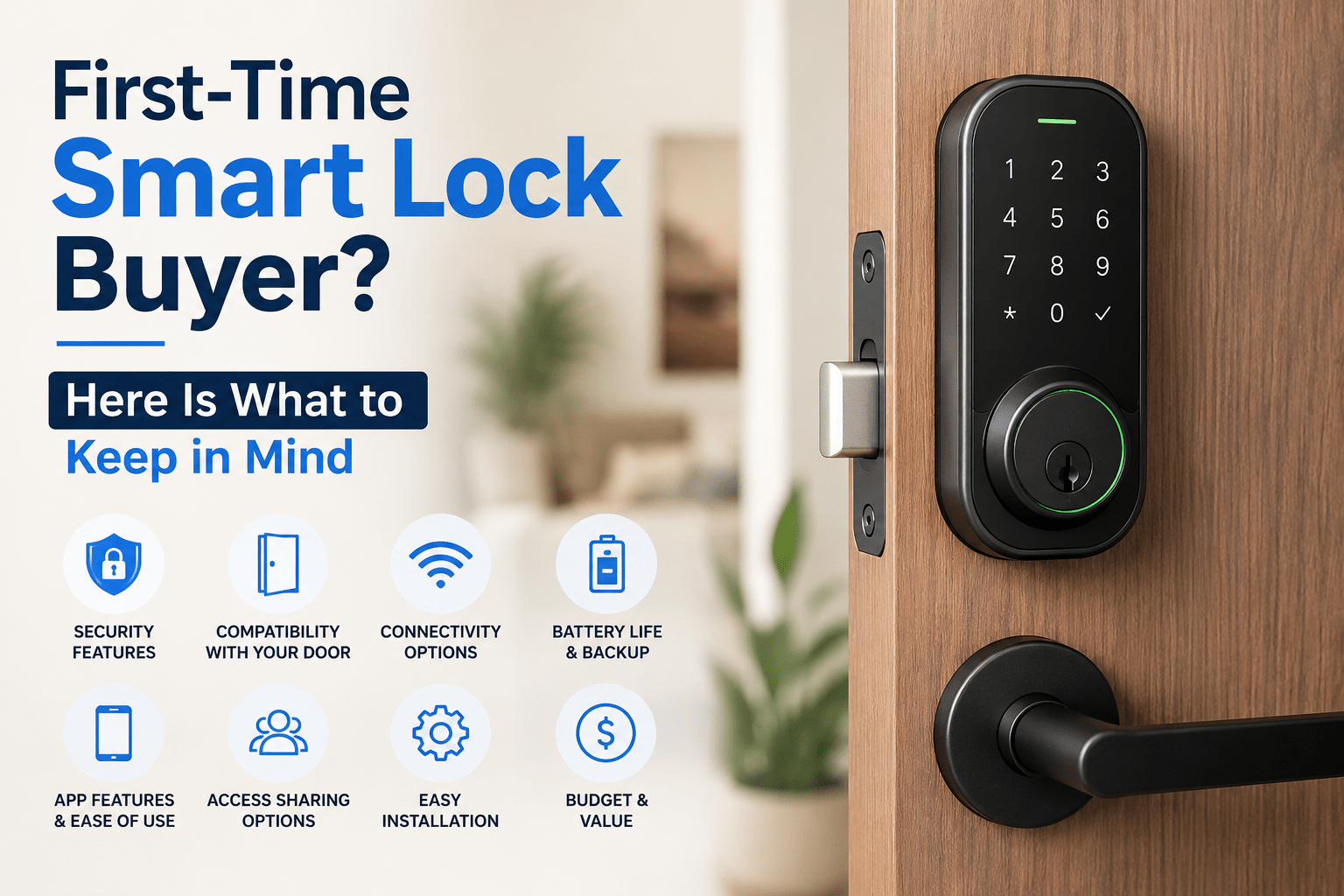
First-Time Smart Lock Buyer? Here Is What to Keep in Mind
Moving from a traditional key to a smart lock is one of the most satisfying home upgrades you can make. Imagine never fumbling for keys at the door, granting a family member access remotely while you are at work, or receiving an alert the moment your child gets home. All of that becomes possible with the right smart lock.
However, the smart lock market offers hundreds of models with different wireless protocols, security ratings, and access methods. Choosing the wrong one can mean incompatibility with your door, poor battery life, or limited features that leave you wishing you had done more research. This guide walks first-time buyers through everything they genuinely need to know.
Table of Contents
- Compatibility and Door Hardware
- Choosing Your Access Methods
- Understanding Connectivity Options
- Power Management and Backup Options
- Security Ratings and Advanced Features
- India-Specific Considerations
- Frequently Asked Questions
- Conclusion
1. Compatibility and Door Hardware
Before comparing features, start with your physical door. Not every smart lock fits every door, and measuring incorrectly leads to returns, delays, and installation costs.
Full Replacement vs Retrofit Locks
Full Replacement Locks
These require removing your entire existing deadbolt, including the exterior keypad and interior lock body. They give you a completely new lock mechanism and are the better long-term choice if you want a cleaner installation and more feature options.
Retrofit Locks (Interior-Only)
These replace only the interior thumb turn of your existing deadbolt, leaving your exterior hardware untouched. Installation is simpler and reversible, making them popular for renters. However, retrofit locks depend on the quality of your existing deadbolt for physical security.
Measurements You Must Take
Before purchasing any smart lock, measure:
- The backset: The distance from the door edge to the centre of the borehole. In India, this is typically 60mm or 70mm for standard doors.
- Door thickness: Standard apartment doors range from 35mm to 50mm. Non-standard thickness may require an adapter kit.
- Borehole diameter: The standard is typically 54mm. Confirm that the lock you choose fits your existing borehole.
- Door material: Wooden doors, metal doors, and hollow-core doors each have different installation requirements.
2. Choosing Your Access Methods
Keypads and PIN Codes
Keypads are highly reliable and user-friendly. Look for touchscreen or physical-button keypads that allow you to generate temporary codes for housekeeping, guests, or delivery personnel, which expire automatically after a set period. Many Indian families prefer keypad access as the primary method for its simplicity and reliability.
Biometric (Fingerprint) Scanners
Fingerprint locks offer fast, keyless access. Modern 3D capacitive sensors can recognise a registered fingerprint in under half a second and can store multiple fingerprints for different family members. They perform well even with slightly damp or worn fingers, but may struggle with very dry skin or hands that have significant surface damage.
Mobile App and Bluetooth
Using Bluetooth or Wi-Fi, these locks connect to your smartphone. Many support auto-unlock, which detects when you arrive near the door and unlocks automatically. Remote control via app requires a Wi-Fi connection, which allows you to lock and unlock from anywhere in the world.
Physical Key Override
As a first-time buyer, keep this as a non-negotiable requirement. Choose a model that includes a traditional keyhole as a backup. Technology can fail, batteries can die, and connectivity can drop. A physical key backup ensures you are never locked out regardless of what happens to the smart system.
“A smart lock is only as reliable as the thought you put into choosing it. The right match for your door, your family, and your routine makes all the difference.”
3. Understanding Connectivity Options
Wi-Fi Built-in
Connects directly to your home router and allows remote control from anywhere without additional equipment. The trade-off is faster battery drain compared to other protocols. Best for users who want remote access and convenience above all else.
Bluetooth
Energy-efficient and allows local control when you are within a short range of the door. To unlock remotely while away from home, a Bluetooth lock typically needs a separate Wi-Fi bridge device. Good for users who mainly operate the lock while at home.
Z-Wave and Zigbee
These low-power mesh networking protocols offer excellent battery life and work well in larger homes. However, they require a compatible smart home hub to connect to the internet, which adds cost and setup complexity.
Matter-Compatible Locks
Matter is the modern universal standard for smart home devices. Matter-compatible locks offer better cross-brand compatibility, faster response times, and stronger long-term software support. If you are building out a connected home, a Matter-compatible lock is a future-proof investment.
4. Power Management and Backup Options
Smart locks run on batteries, and power management is a vital safety consideration for first-time buyers.
Battery lifespan
Most smart locks run on standard AA alkaline batteries or proprietary rechargeable lithium packs. Depending on the wireless protocol and usage frequency, expect 4 to 12 months from a set of batteries. Wi-Fi locks drain batteries faster than Bluetooth or Z-Wave equivalents.
Low-battery warnings
Reliable smart locks will flash LED lights, emit audible beeps, and send push notifications to your phone when power drops below a safe threshold. Do not ignore these alerts.
Emergency backup options
If the battery completely dies before you replace it:
- Physical key slot: Slide a traditional key into the hidden keyway on the exterior panel.
- 9V battery terminal: Many keyless exterior panels feature two metal contacts at the bottom. Holding a 9V battery against these contacts provides enough power to open the lock temporarily, giving you time to replace the main batteries.
5. Security Ratings and Advanced Features
Security grading
Look for locks with internationally recognised security certifications. While the ANSI/BHMA grading system is US-based, many Indian brands and imported brands display equivalent ratings. Grade 1 or equivalent indicates the highest residential security standard.
Advanced security features to look for:
- Auto-lock: Automatically throws the bolt after the door closes for a set period, eliminating the risk of walking away without locking.
- Tamper alarms: Sensors that trigger a loud alert if someone attempts to force, drill, or pry the lock.
- Wrong PIN lockout: After a set number of incorrect attempts, the keypad locks for a cooldown period to prevent brute-force access.
- Access logs: A timestamped record of every entry and exit stored in the app, allowing you to see exactly who came in and when.
- Two-factor authentication: Ensures that even if someone has your PIN, they also need your phone to gain app-level access.
6. India-Specific Considerations
Beyond the universal buying criteria, first-time buyers in India should also consider:
- Door type compatibility: Many Indian apartments use heavy-duty metal doors or thick wooden doors with non-standard mortise locks. Confirm compatibility with your specific door type before purchasing.
- Power cut resilience: In areas with frequent electricity outages, a battery-powered smart lock is an advantage over any lock dependent on mains power. Ensure the battery backup is robust enough to last through extended power cuts.
- Humidity and temperature tolerance: If your main door is partially exposed to the elements, especially in coastal cities with high humidity or regions with extreme heat, look for locks rated for outdoor or semi-outdoor use.
- Brand serviceability in your city: Before committing to any brand, confirm that authorised service is available in your city. Brands with established dealer networks in India offer better post-sale support for installation, maintenance, and repairs.
Frequently Asked Questions
Q: Can I install a smart lock on any door in my home?
Smart locks are primarily designed for main entry doors with a standard deadbolt or mortise lock. Some models are compatible with gate locks, but interior room doors and non-standard door types typically require specific research before buying.
Q: What happens if the Wi-Fi goes down?
Local access methods (fingerprint, PIN, physical key) continue to work regardless of internet connectivity. Remote app control will not function without Wi-Fi, but you can always access your home through the lock directly.
Q: How secure is a smart lock compared to a traditional deadbolt?
A quality smart lock with a Grade 1 security rating is at least as physically secure as a high-quality traditional deadbolt. The added digital layer (encrypted communication, auto-lock, tamper alerts) means that for most households, a well-chosen smart lock is more secure overall than a traditional lock.
Q: Can multiple family members use the same smart lock?
Yes. Most smart locks allow you to register multiple fingerprints, create individual PIN codes, and add multiple mobile app users. You can also set access schedules so that specific codes or fingerprints only work during set hours.
Q: Is it easy to change the PIN if someone I previously gave access to moves out?
Yes. Revoking access is as simple as deleting the relevant fingerprint, PIN, or app user from the settings, which takes seconds and does not require a locksmith or key change.
Conclusion
Buying your first smart lock is about balancing convenience, physical security, and compatibility with your home. Measure your door carefully, choose entry methods that match your daily habits, and ensure the lock has a physical key backup as a fail-safe.
Take your time, read real user reviews from Indian buyers, and if possible, see the lock demonstrated before you purchase. The right smart lock will make you wonder how you managed without one.
Want to see a smart lock in action before you decide? Book a free live video demonstration with one of our product experts today.
Share: